How Do Airplanes Fly?
Four invisible forces keep a giant metal machine in the sky.
Four Forces in a Tug of War
A big airplane can weigh more than 400 tons — heavier than 50 elephants! So how does it stay in the air?
Four forces pull and push on an airplane at the same time. LiftThe upward force that holds the plane in the sky pushes it up. WeightThe pull of gravity — it tries to drag the plane down to the ground pulls it down. ThrustThe forward push from the engines pushes it forward. DragThe air pushing back and slowing the plane down slows it down.
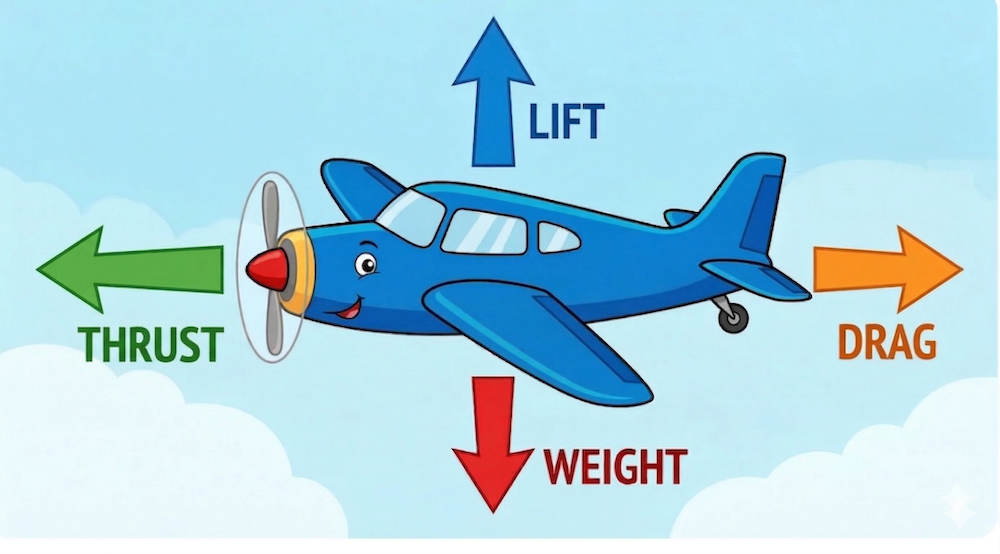
The four forces of flight — always working at the same time.
For the plane to fly, lift has to beat weight, and thrust has to beat drag. It's like a tug of war in two directions!
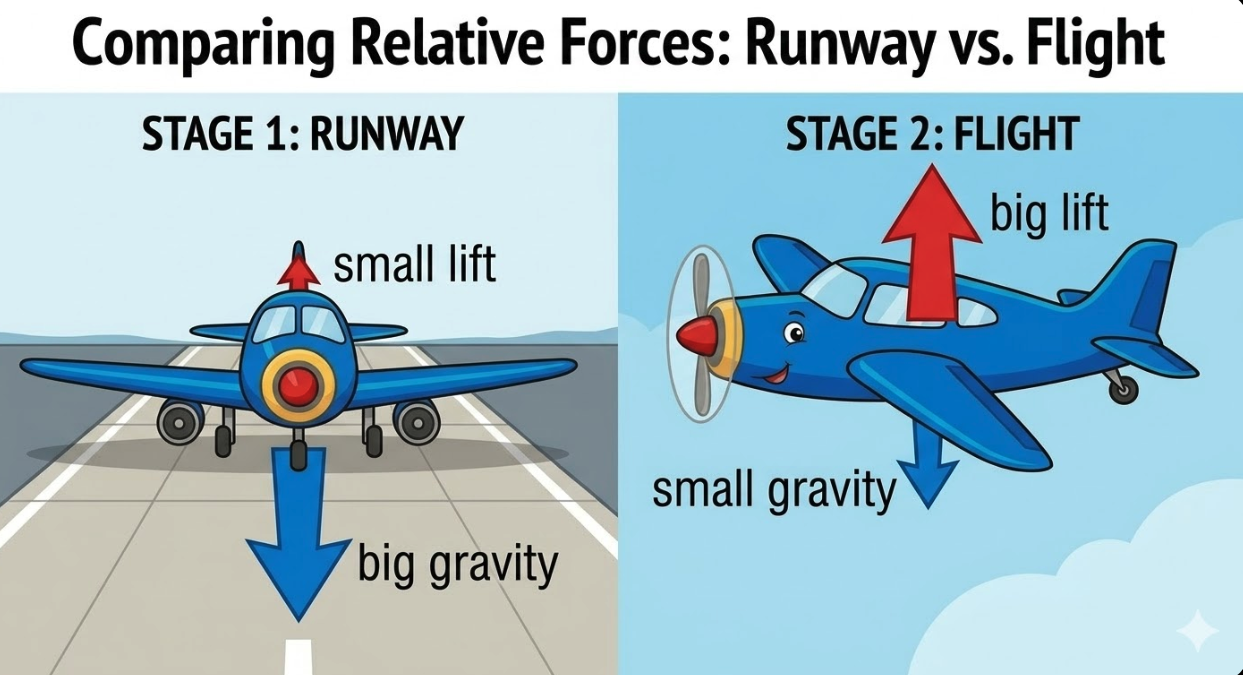
On the runway, gravity wins. In the air, lift wins!
Flight is a tug of war. When lift beats weight and thrust beats drag, the plane flies.
Lift: The Secret Is the Wing
Look at a wing from the side. The top is curved and the bottom is flatter. This shape is called an airfoilThe special shape of a wing — curved on top, flatter below — designed to create lift.
When the plane moves forward, the wing pushes air downward and speeds up the air on top. Faster air has lower pressure. So the air above the wing pulls it upward — that's lift!
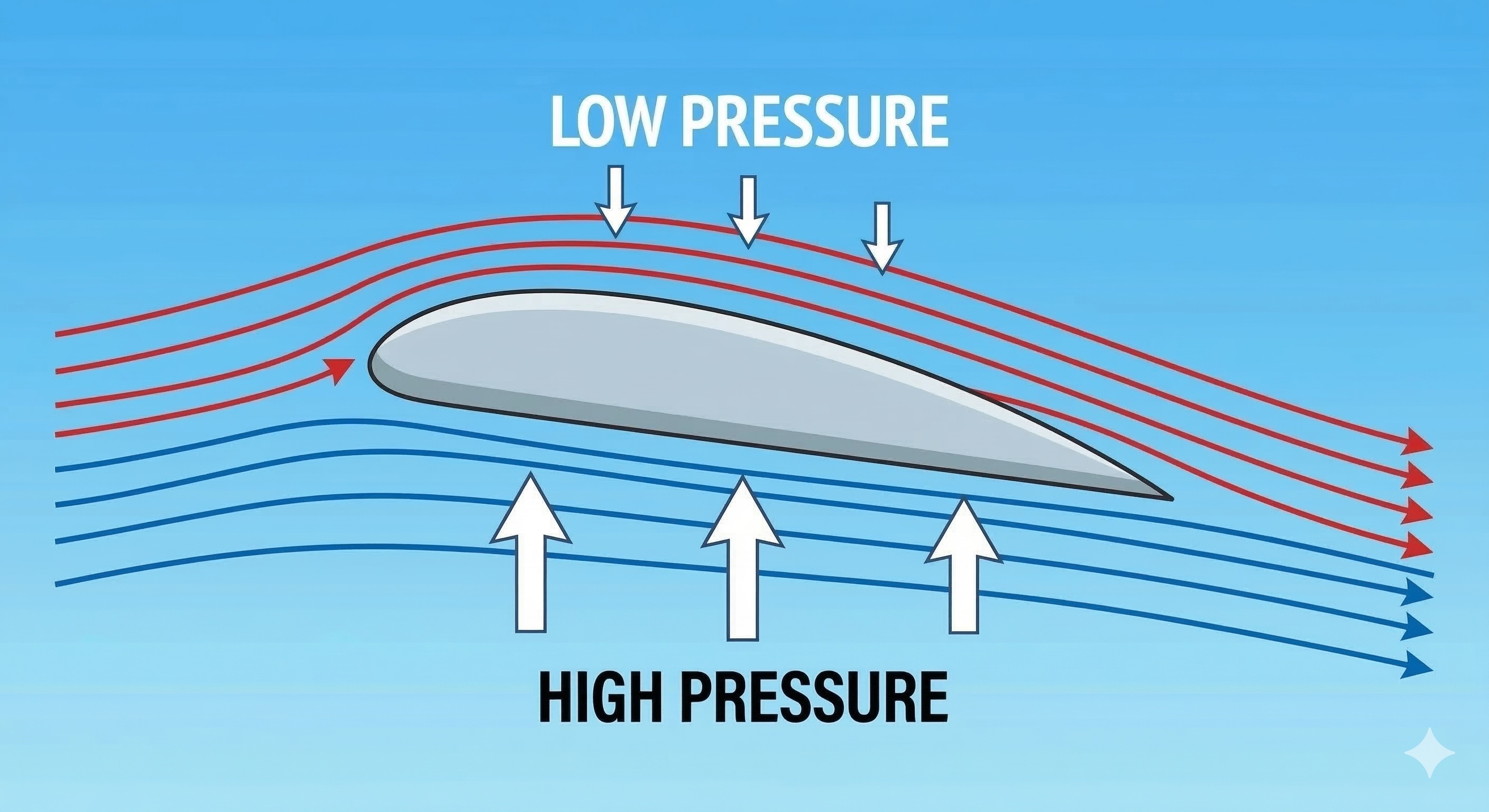
Low pressure on top pulls the wing up. Higher pressure below helps push it up too.
Your own wind tunnel, computed live: the streaks, the colors, and the lift arrow all come from the mathematics of flowing air — nothing is pre-drawn. Tilt the wing slowly. Can you find the angle with zero lift? Then push past 14° to discover the stall.
Go Deeper: Two Ways Scientists Explain Lift
Scientists have two ways to explain lift:
Bernoulli's Principle: Faster air on top has lower pressure. The pressure difference pushes the wing up.
Newton's Third Law: The wing pushes air down. The air pushes back up on the wing.
Both are right — but neither tells the whole story. In real flight, all of this happens at the same time!
About the wind tunnel above: it isn't a cartoon. The computer is solving the same equations of moving air that engineers used to design the first airplanes, over a hundred years ago — that's why the streaks bend, speed up, and make lift all on their own. One honest exception: real stall is too wild for this simple math, so past 14° the tunnel shows you what stall looks like instead of truly calculating it.
Watch: The Efficient Engineer — Understanding Aerodynamic Lift
Thrust: The Engines Push Forward
Wings only make lift when air flows over them. So the plane needs to move fast. That's the job of the enginesPowerful machines that push the plane forward by blasting hot air out the back.
Jet engines suck in cold air, squeeze it, mix it with fuel, and light it on fire. Hot gases blast out the back — and that blast pushes the plane forward.
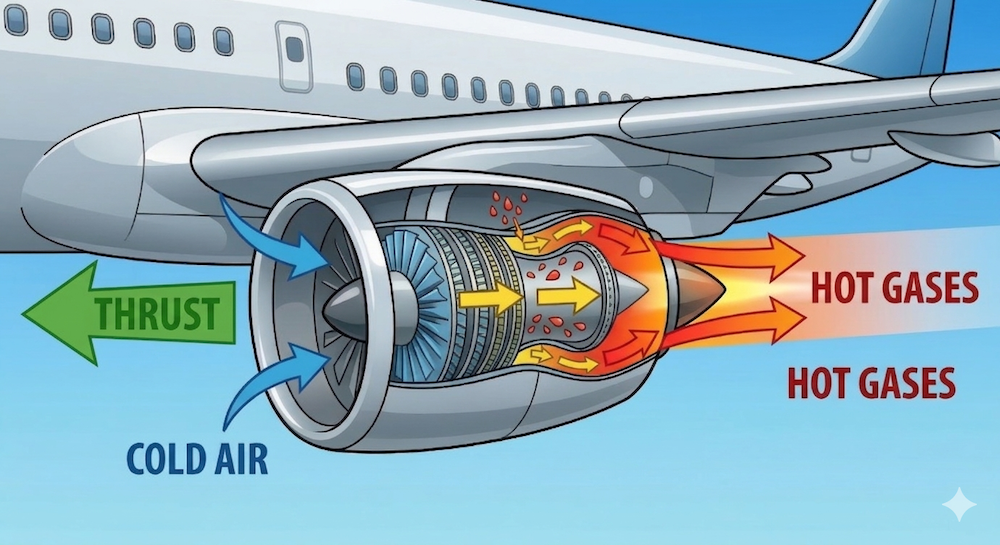
Cold air goes in → gets squeezed and burned → blasts out as hot gas. That's thrust!
Drag: The Air Pushes Back
Stick your hand out of a car window. You feel the air pushing it backward. That's dragThe force that slows anything down when it moves through air.
Drag slows the airplane down. That's why airplanes have smooth, pointed shapes — so the air slides past instead of crashing into them.
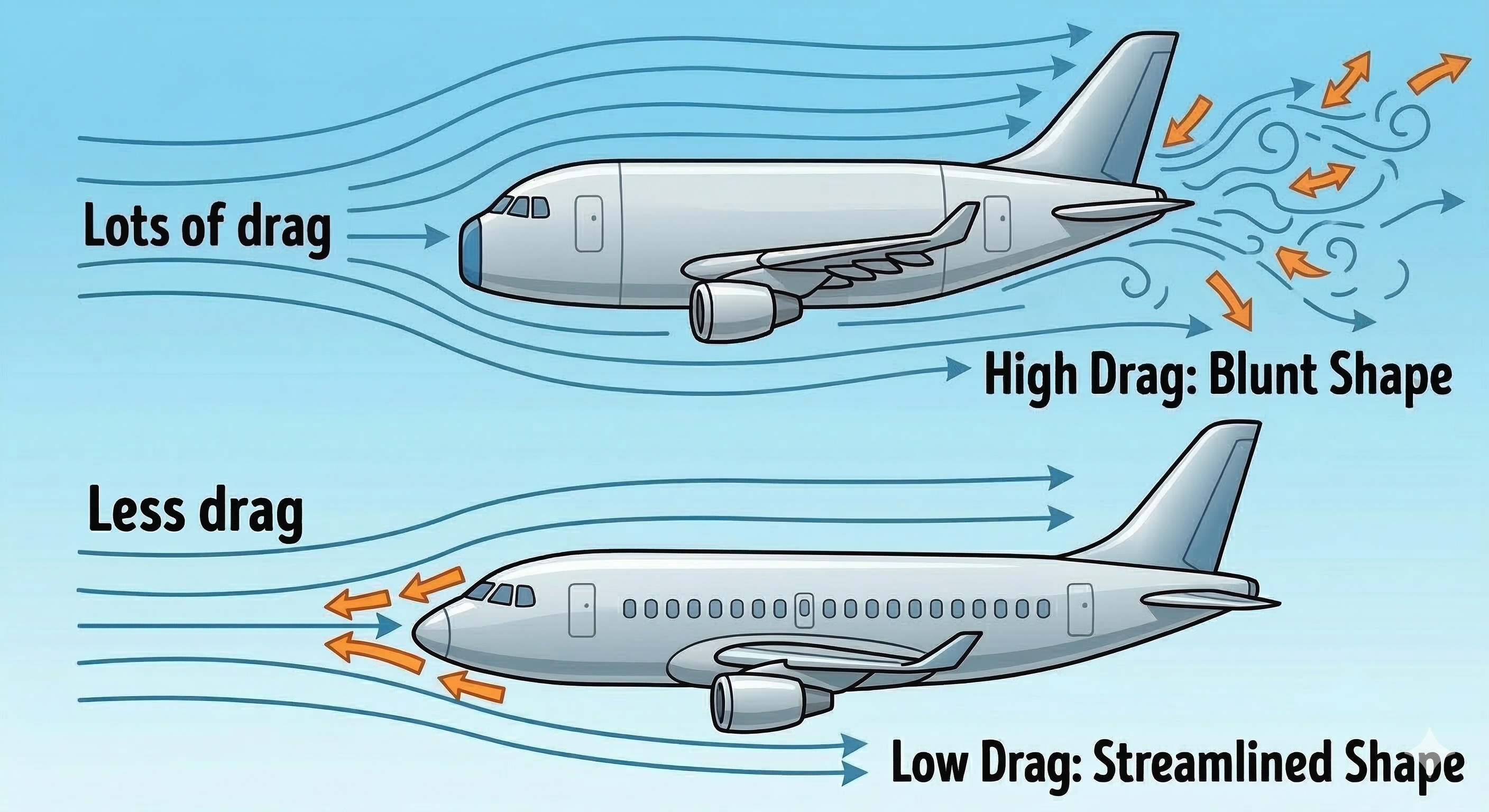
A blunt shape crashes into air. A smooth shape lets air slide right past.
Takeoff and Landing
During takeoff, the engines push faster and faster. Lift gets stronger until it beats gravity — and the plane lifts off!
For landing, the pilot extends special flapsPanels on the wing that slide out to make the wing bigger and more curved for extra lift at slow speeds. They make the wing bigger and more curved, creating extra lift even when the plane is going slow.
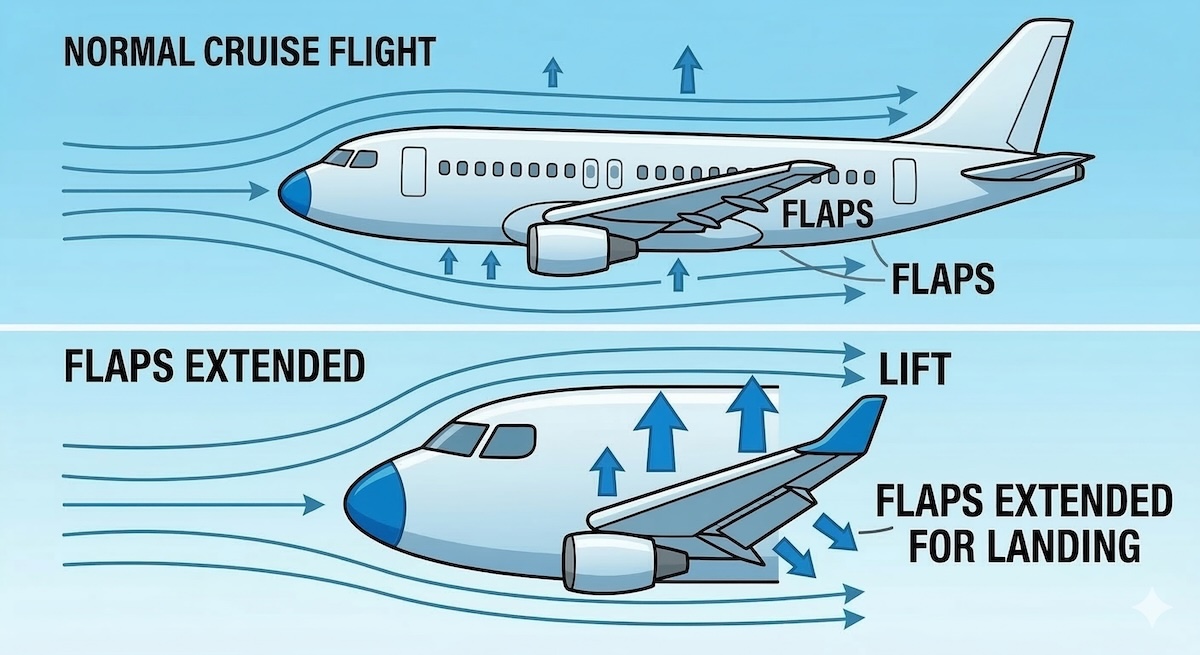
Flaps tucked in for cruising. Flaps out for landing — more lift at slow speed.
Steering in the Sky
Inside the cockpit, pilots have something that looks like a steering wheel — it's called a yokeThe control in the cockpit that looks like a steering wheel. Pilots turn it to roll and push or pull it to pitch the nose up or down.. But it doesn't work like a car. When the pilot turns the yoke, it moves small panels on the wings called aileronsPanels on the outer edge of each wing. One goes up and the other goes down to make the plane roll..
To roll right, the left aileron tilts down and the right one tilts up. The wing with the aileron down gets more lift — so that side rises and the plane banks the other way. Try it yourself:
Turn the yoke to see how ailerons create a roll. The wing with the aileron down gets more lift.
Go Deeper: What Happens to the Forces in a Bank?
When a plane is level, all the lift points straight up — fighting gravity. But when the plane banks, the lift tilts with it. Some of that lift now pulls the plane sideways into a turn — but less of it is fighting gravity.
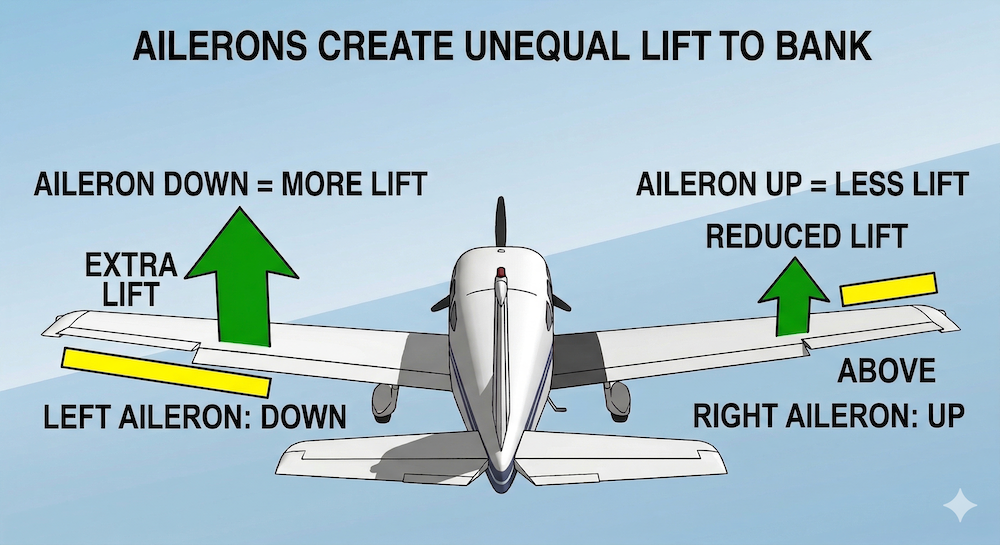
The ailerons create unequal lift. The side with more lift rises, banking the plane.
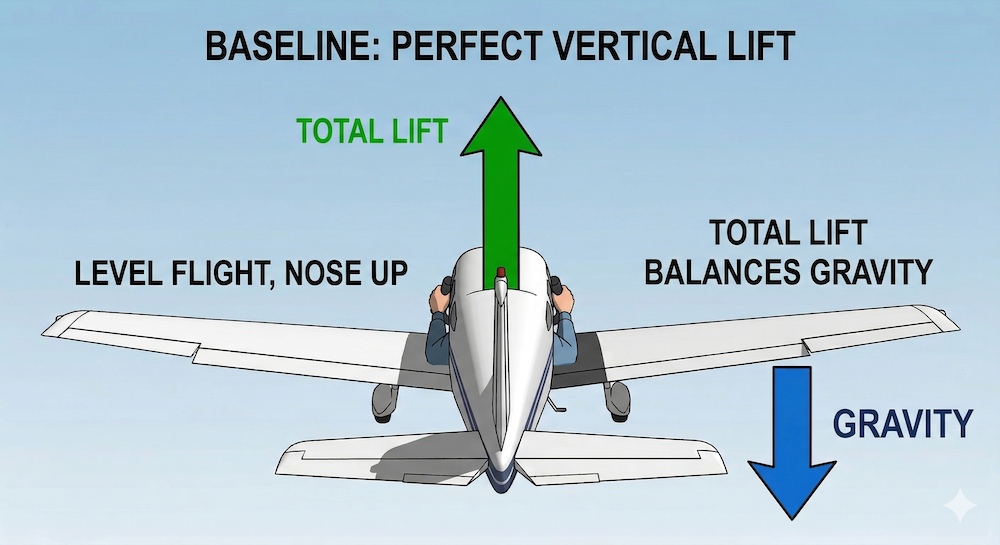
In level flight, all the lift points straight up and balances gravity perfectly.
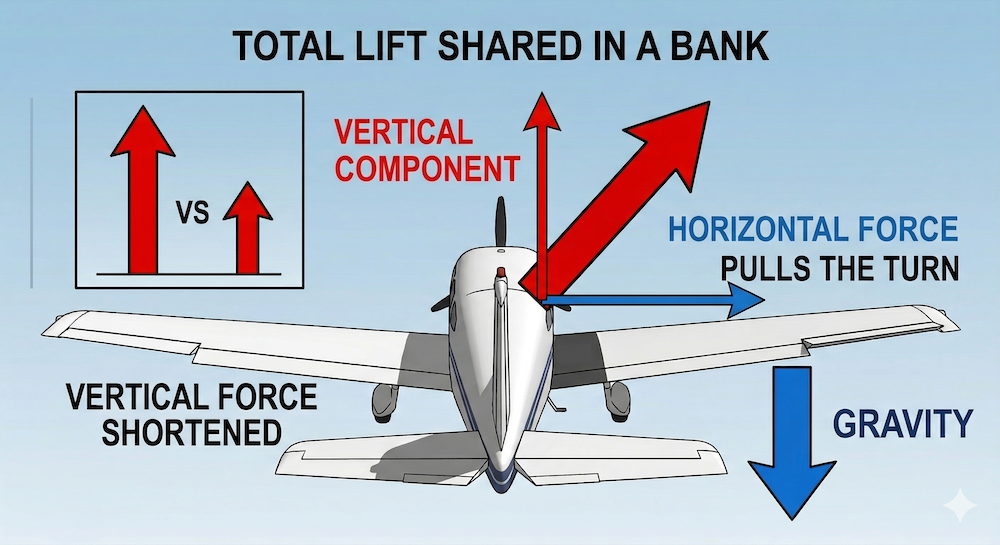
In a bank, lift tilts. The vertical part shrinks — less force fighting gravity. The horizontal part pulls the plane into a turn. The plane starts to lose altitude!
The pilot fixes this by pulling the yoke back to pitch the nose up. When the elevator on the tail tilts up, it pushes the tail down — which tips the nose up. With a steeper angle, the wings create more total lift.
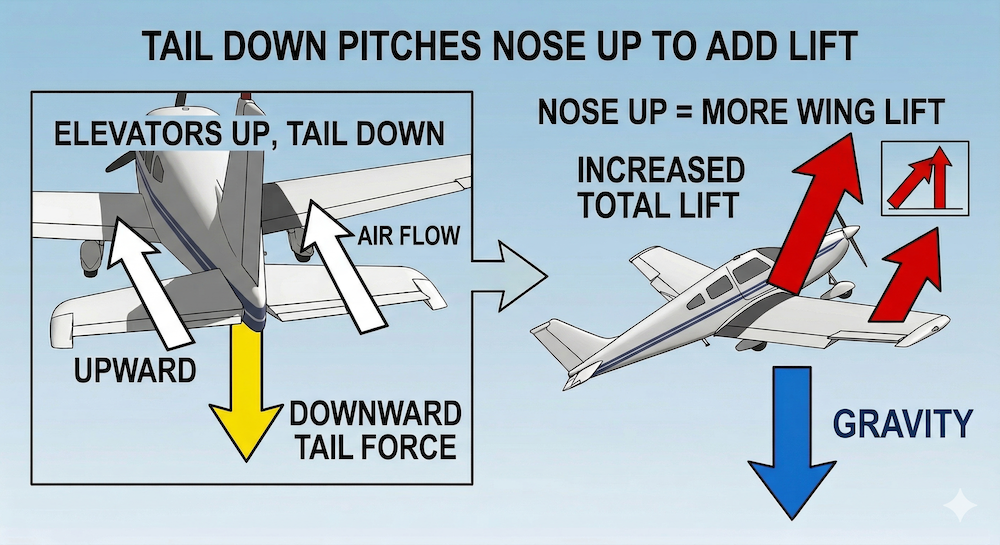
Pulling the yoke back tilts the elevator, pushing the tail down and the nose up. More total lift — enough to hold altitude even in a bank.
That's why pilots in a turn are doing two things at once: the yoke is turned (to bank) and pulled back (to keep altitude).
Putting It All Together
Every time you see a plane in the sky, all four forces are at work. Thrust forward. Lift up. Weight down. Drag back.
It's not magic. It's air, shape, speed, and balance.
Every moment of flight is a balancing act between four invisible forces.